1. Observe the pattern
Note which surfaces collect water, when it begins and how long it remains. Repeat the observation under similar shower conditions. This gives you a baseline and helps distinguish a brief steam event from a room that is staying damp.
2. Create a clear air path
Air cannot leave effectively if replacement air cannot enter. A closed, tightly sealed bathroom may limit an otherwise working exhaust fan. Use the room as intended and avoid blocking grilles or door undercuts.
3. Ventilate during and after bathing
Run a functioning exhaust fan during the moisture-producing activity and long enough afterward for conditions to move back toward the baseline. If the bathroom has a window and local conditions make opening it appropriate, cross-ventilation may help. Never assume a noisy fan is moving enough air.
4. Remove avoidable surface water
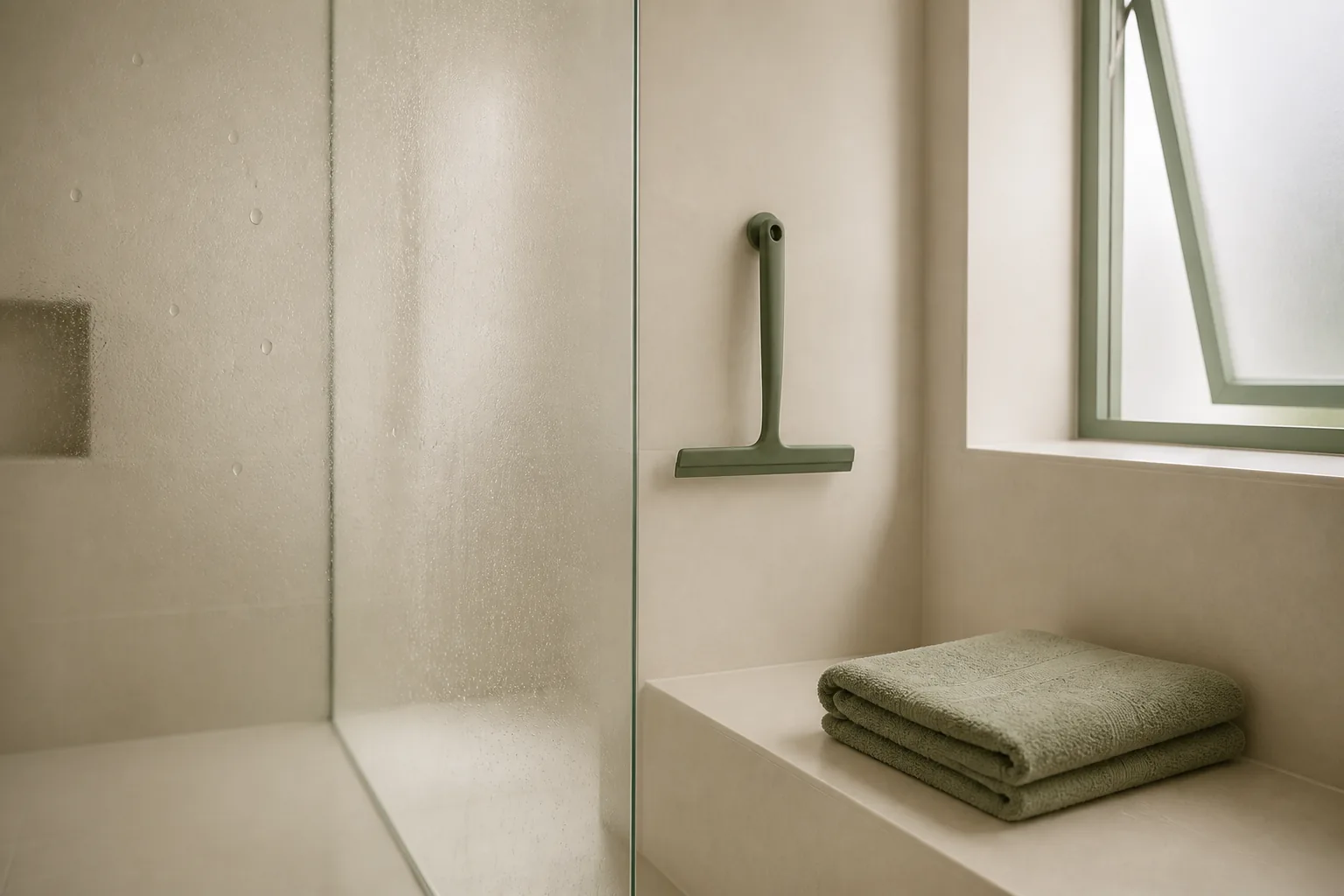
A squeegee can shorten the time water sits on shower walls and doors. Hang towels so air can reach them, keep wet bath mats from remaining bunched up and address plumbing leaks separately from shower steam.
5. Measure repeat conditions
A small humidity meter can help compare before-and-after conditions, but placement matters. Keep it away from direct spray and do not interpret a single peak reading in isolation. Look at how quickly the reading returns toward the room's usual level.
When to escalate
Recurring water damage, visible deterioration, persistent staining, suspected hidden leaks or electrical concerns deserve qualified inspection. Moisture-control products cannot repair a building defect.
Your simple routine
- Record how long visible condensation remains.
- Clear air inlets and exhaust grilles.
- Use ventilation consistently.
- Dry easy-to-reach wet surfaces.
- Compare repeat conditions before buying equipment.