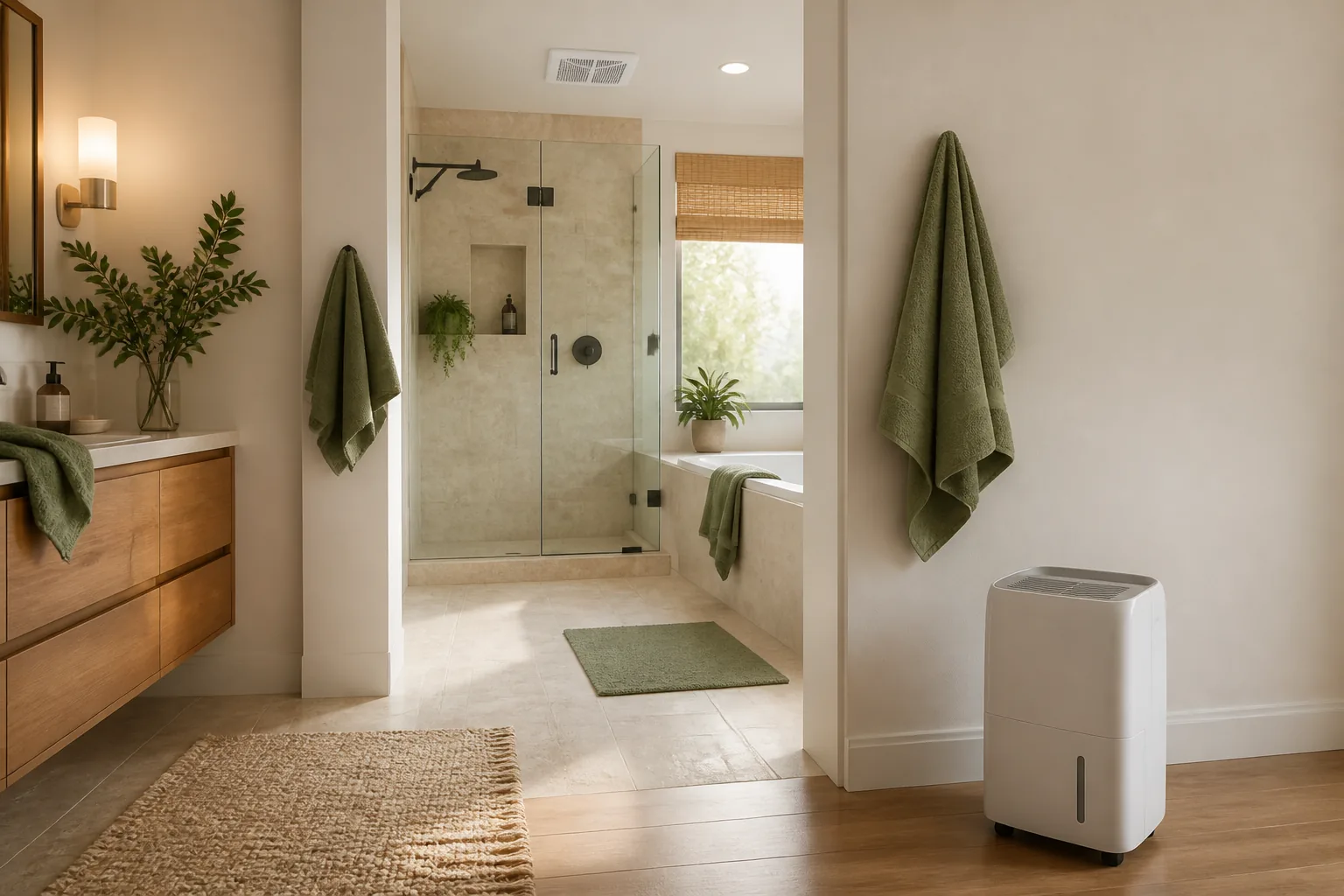
The practical difference
An exhaust fan and a dehumidifier should not be treated as interchangeable boxes. A fan creates airflow and, when correctly ducted, replaces damp bathroom air with drier air from elsewhere. A dehumidifier pulls room air across a cooling surface, collects water and returns drier air to the room.
| Question | Exhaust fan | Dehumidifier |
|---|---|---|
| Main job | Move humid air out | Remove water from indoor air |
| Needs an exterior route? | Yes, for proper exhaust | No exterior duct |
| Creates collected water? | No | Yes; tank or drain |
| Typical routine | Run during and after bathing | Set, empty or route the drain, and clean the filter |
| Installation | May involve electrical and duct work | Portable placement near a suitable outlet |
When to check the fan first
Start with the existing exhaust system when the bathroom has a fan that is intended to vent outdoors. Check whether air is actually moving, whether the grille is clogged with dust and whether the duct terminates where it should. Installation and electrical work should be handled according to local requirements.
- The mirror remains fogged long after the fan has run.
- The fan sounds active but airflow at the grille feels weak.
- The room has no obvious makeup-air path under the door.
- Moisture appears mainly after showers rather than all day.
When a dehumidifier may help
A portable dehumidifier may be worth comparing when outdoor venting is unavailable, a renter cannot alter the building, humidity remains elevated beyond bathing periods, or nearby rooms also contribute moisture. Bathroom placement requires extra care because water and electricity are a hazardous combination.
A five-question decision check
- Is there an existing fan, and does it actually vent outdoors?
- Does the problem occur only during bathing or persist throughout the day?
- Can damp air leave while replacement air enters?
- Is there a safe, manufacturer-approved place for a portable appliance?
- Who will empty the tank, clean the filter and monitor the setup?
Bottom line
Do not buy by keyword alone. Fix an underperforming ventilation path when that is the root problem. Compare a dehumidifier when moisture remains, structural changes are not possible or the humidity source extends beyond one short shower period.